
FREE TOOL — FILLABLE + PRINTABLE PDF
Child Appointment Prep & Visit Summary
A free appointment preparation worksheet for parents and caregivers
Appointments can be a lot to hold in your head. Put your questions in one place before the visit, then keep the next steps together afterward.
Use this two-page sheet for a visit with your child's clinician or specialist. Start with what matters most. Every field is optional.
- Space for three concerns and three questions
- Your child's priorities and communication preferences
- Notes on what was explained and what was agreed
2 pages · Fillable and print editions
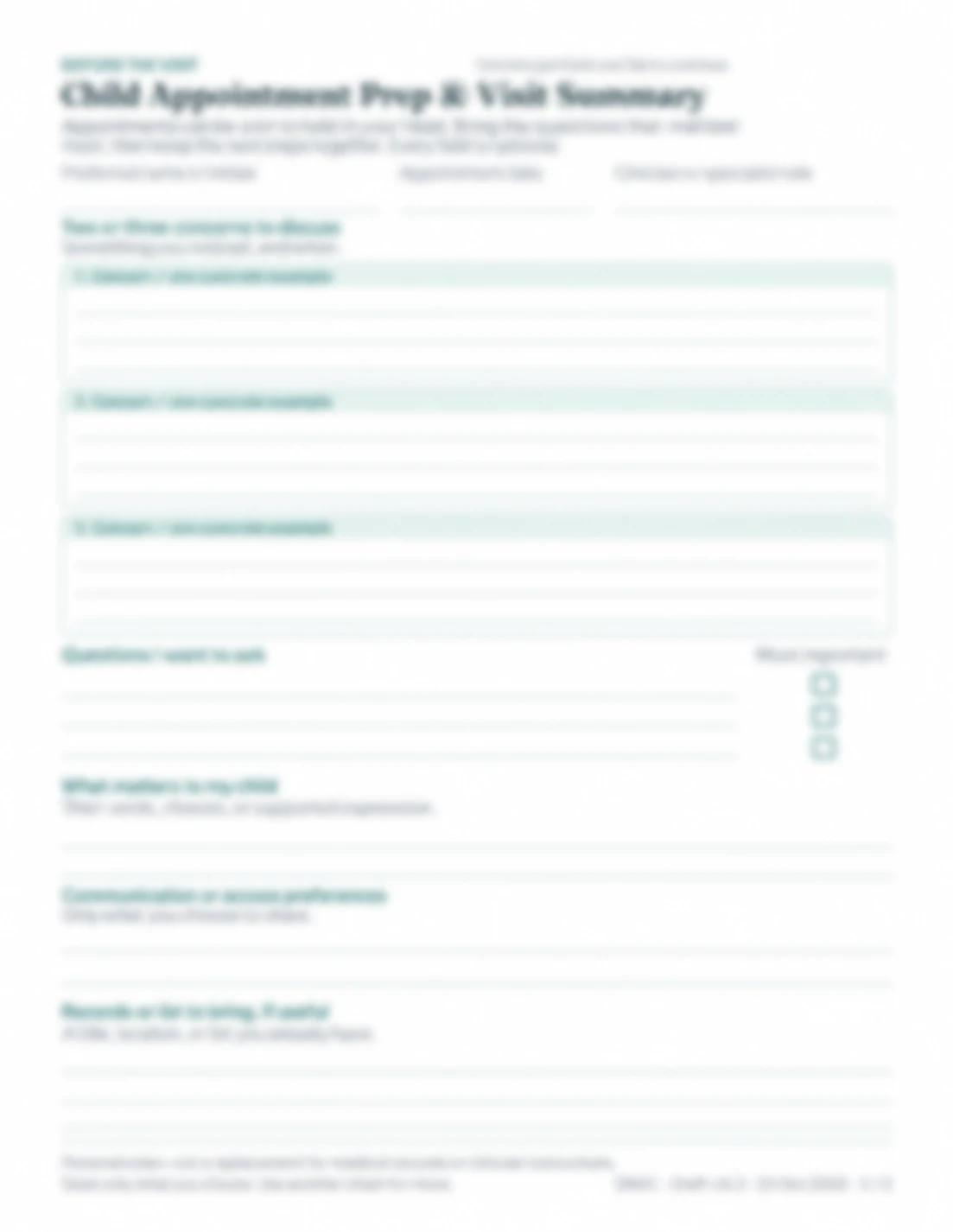
A place for the question you do not want to forget
You may be preparing for a first appointment, a follow-up, or a conversation with a new specialist. You do not need a complete history to begin this sheet. One concern, one example, or one question is a useful starting point.
This is a personal organizer—not a diagnostic checklist, treatment plan, or replacement for medical records and clinician instructions. It does not tell you whether a concern can wait for an appointment.
What is included
Page 1: Before the visit
Note up to three concerns, with a concrete example of each. Write the questions you want to ask and mark the most important one. Add what matters to your child, communication or access preferences, and a reminder of any records or list you want to bring.
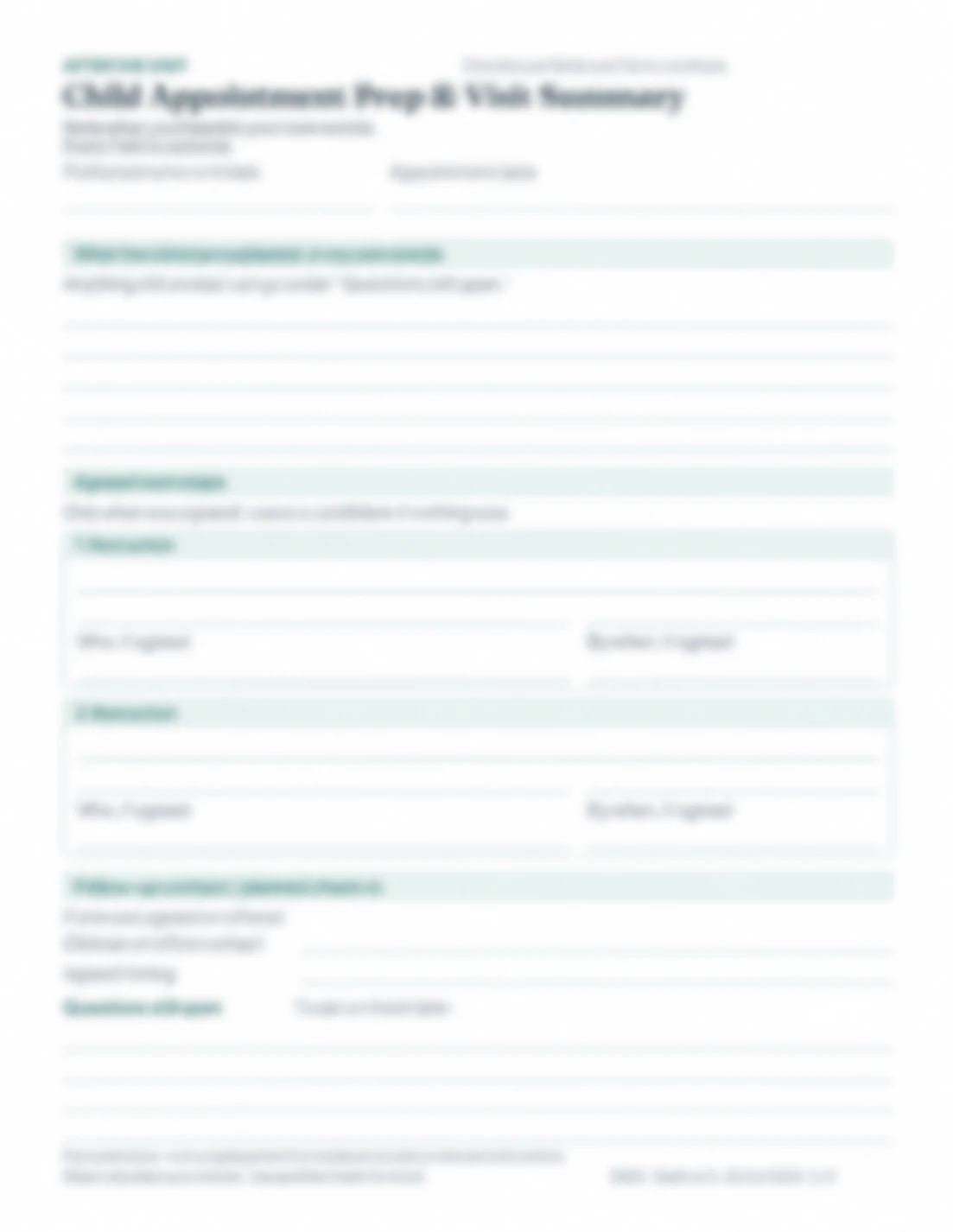
Page 2: After the visit
Record what the clinician explained in your own words. There is space for two agreed next steps, who will do what and timing if agreed, a follow-up contact or check-in, and questions still open.
A suggestion is not an agreed plan. If something was unclear or no next step was agreed, leave the action box blank and use “Questions still open.”
How to use it
Before: choose your starting point
Write what you want to discuss. A short example is enough. Mark the question you most want to ask; leave anything that does not help blank.
During: keep your notes close
Use the sheet as a reminder, not a script you have to finish. Include your child's words, choices or supported expression where helpful. Keep your own observations separate from what your child has expressed.
After: check what comes next
Write down what you understood and only the actions that were agreed. If your notes are unclear, keep the question open and ask the clinician or office to clarify.
Choose the version that suits you
Fillable PDF: Download and save a copy, then open it in a PDF reader. Each writing line is a separate field. Move to the next line by selecting it, or use Tab on a keyboard. Do not use Enter or paste line breaks into a field. Keep notes short, save, and reopen the file to check that your answers are visible.
Print PDF: Print the blank two-page version and write by hand. Use another sheet if you need more room.
PDF readers can handle forms differently. Check the saved file before relying on it at an appointment. These are US Letter pages; check your printer's preview if you use another paper size.
Keep the details you share in your control
Use initials if you prefer. Skip any field you do not want to complete, store your filled copy somewhere private, and share only what you choose.
Filling in the PDF does not send your answers to SNSC. Do not put your child's name, appointment notes or health information in the website's email field.
Enter your email to receive links to both PDFs. The email also includes a separate confirmation step. You can open the PDF links without confirming your email.
Get the free two-page worksheet
Keep a blank copy for the next appointment. The resource includes a fillable edition and a print edition, each with two pages.
Questions parents may have
No. The prompts are not tied to a diagnosis. Use the parts that fit the appointment and leave the rest blank.
No. It is your own record of what you heard, what you want to check, and the next steps agreed at the visit. Keep the clinician's written instructions and medical records separately. Ask the clinician or office about anything that is unclear or different from your notes.
No. Every field is optional. You can start with one question and use only the spaces that help.
There are two editions: a fillable PDF for short typed notes and a print PDF for handwriting. In the fillable version, each writing line is a separate field. Save and reopen your copy to check it; form behavior varies between PDF readers.
Not when you fill in the downloaded PDF. Your answers are not submitted through this website. Keep your completed copy private and choose who you share it with.
Use another sheet or a separate note. Do not squeeze an important detail into a box that is too small. You can put a short reminder on the worksheet that points you to the longer note.
Help for the next part
Why this format
The American Academy of Pediatrics encourages families to prepare questions, prepare their child for the visit, and keep notes around health visits. NIH’s general guidance for doctor visits suggests listing what you want to discuss and asking about the most important items first. This SNSC sheet puts your before-visit questions and after-visit notes into one short, optional format.
Further reading:
By Special Needs Support Circle
Publication date: October 23, 2026