.avif)
How to Find the Right Specialist After a Diagnosis — Without Losing Your Mind
Finding a good specialist isn’t the only step. You also need to know who to call first, what to do while you wait, and when to push for faster help. This guide walks through all of it — calmly.



Who to call first, and what to do while you wait
If your child may need more specialist support, the right first move depends on the concern — not the diagnosis. For speech, a speech-language pathologist may be the first call. For learning or attention concerns, the school evaluation team can often move first. For autism or complex developmental questions, a developmental pediatrician or qualified evaluation provider may be involved, but waitlists are often long.
Most families do not need to do everything at once. This guide helps you triage: what to start now, what can wait, and what you can do while you wait for medical appointments.

This guide is educational and caregiver-support focused. It is not medical, legal, insurance, or benefits advice. Rules and access vary by state, plan, school, and provider.
Start with the concern, not the diagnosis
Most parents start by trying to find the “right” specialist — the one whose title sounds the most authoritative, the one their pediatrician mentioned, or the one that keeps showing up in searches.
That is how families end up on the wrong waitlists. A better starting point is the concern itself. You do not need perfect medical vocabulary to take the next step.
What worries you most right now?
Pick the one or two concerns that feel most urgent. “My child isn’t talking like other kids” may point toward speech. “My child can’t sit still in class” may point toward school evaluation and possibly psychology. “My child is having seizures” means pediatrician promptly, and pediatric neurology may be needed.
You do not need a perfect diagnosis
Many supports can start before a final diagnosis. Early Intervention can evaluate developmental needs before a medical diagnosis in many cases. School evaluations do not always require a medical diagnosis. Therapies may begin based on observed needs, depending on provider, program, and insurance rules.
The first specialist is not always the most important one
The specialist who can see you soonest may be more useful than the one with the longest wait. Building data and momentum matters more than finding “the best.” You can add specialists later.
Which concerns matter most right now — and which can wait
Triage by urgency to reduce the calling load.
Call today
- Seizures or sudden neurological changes
- Significant motor regression
- Severe behavior changes affecting safety
- Feeding or swallowing issues affecting nutrition
Start the process this week
- Speech, language, or communication delays
- Autism evaluation
- Learning or attention concerns affecting school
- Sensory or motor delays affecting daily life
Add over time
 Specialists for secondary concerns
- Multiple opinions on already-clear diagnoses
- “Nice to have” providers your team did not specifically recommend
Permission: Getting on a waitlist now does not commit you to anything. You can cancel later if you do not need the appointment.
Five ways to find good specialists besides your pediatrician
Your pediatrician’s referral list is one source. It is rarely the only one. Here are five better starting points.

Use the in-network search, but verify directly with the provider’s office. Ask whether they accept your exact plan, not just your insurance company.

Local parent recommendations can be useful when the question is specific. Better: “Who do you see for speech and feeding?” Weaker: “Is this provider good?”

They may know which providers families commonly use, especially for therapists and developmental supports. Ask: “Who do families in our area usually work with for this concern?”

Local chapters may keep provider lists. Verify recommendations directly before relying on them.

These can be useful for complex or rare conditions. They may have longer waitlists, multidisciplinary teams, Medicaid acceptance, or financial assistance pathways — but families must verify directly.
Cast a wide net. Apply to 3–5 providers, not 1–2. Cancel later if needed.
If the waitlist is months long, you’re not stuck
Waitlists for pediatric specialists can run months. The first reaction is panic. Here’s the move: get on more than one list, then use the wait time productively.
Get on multiple lists at once
Three to five waitlists is reasonable. Cancel when you book somewhere that works. Providers expect this. Do not feel guilty for keeping options open.
Ask about cancellation lists
Many practices keep cancellation lists. Ask whether you can be called for short-notice openings and tell them if you can come with 24–48 hours’ notice.
You are not locked in. Get on the list, take the appointment if it helps, and keep looking if the fit is not right.
Use the wait time productively
 Start documentation.
- Get on Early Intervention or school evaluation paths in parallel where relevant.
- Build your folder.
- Start a behavior tracker.
- Gather reports and prior evaluations.
When waitlists matter less
While medical waits — Early Intervention and school can move in parallel
This is one of the most important things to understand. A specialist can help clarify what is going on. But you do not always have to wait for that appointment before asking Early Intervention or the school for support.
Medical track
Join waitlists, ask about cancellations, gather reports, and prepare for the specialist visit.
EI / school track
Request evaluation or supports while you wait, depending on age, eligibility, state rules, and school process.
Documentation track
Use notes and behavior data so future appointments start with evidence, not memory.
If your child is under 3 — Early Intervention may be able to start now
Early Intervention is connected to Part C of IDEA. It supports developmental evaluation and services for infants and toddlers. It is not the same as a medical diagnosis from a clinician. A child may be evaluated for EI based on developmental concerns, depending on state rules. Services and costs vary by state.
See the Early Intervention Guide.
Boundary to remember: Early Intervention can help evaluate developmental needs and connect families with supports. It is not the same as receiving a medical diagnosis from a clinician.
If your child is 3 or older — request a school evaluation in writing
Schools have evaluation obligations when disability is suspected, but timelines and procedures vary by state. A school evaluation does not always require a medical diagnosis. School-based supports may include an IEP or 504 plan if the child qualifies. Send the request in writing to the principal and special education director.
See the IEP Guide for Parents.
Run them in parallel. You do not have to wait for one system to finish before starting another.
Call insurance before you book the appointment
Insurance complexity is one of the most exhausting parts. A short call before booking can prevent surprise bills later.
HMO plans often require referrals from a primary care provider. PPO plans may offer more flexibility, often with different costs. Medicaid rules vary significantly by state and managed-care plan. State waiver programs may unlock additional coverage, depending on eligibility and state rules.
Questions to ask your insurance
- “Is this provider in-network for our specific plan?”
- “Do I need a referral before booking?”
- “Is prior authorization required?”
- “How many visits are covered per year?”
- “What is our copay or coinsurance for specialist visits?”
- “Can I get a reference number for this call?”
Document every call
Common traps: out-of-network charges, expired referrals, prior authorization requirements, visit limits, and providers listed as in-network but not actually accepting the plan.
Questions to ask before you book the appointment
A five-minute phone screen can save months on the wrong waitlist.
Verify the basics
- “Does this provider see children with [your concern]?”
- “Are they currently accepting new patients?”
- “What is the wait time for a new patient evaluation?”
- “Do they accept [your exact insurance plan]?”
- “Do we need a referral or prior authorization?”
Watch for red flags
- Evasive or rushed answers
- Refusing to explain the general approach
- Not asking about your child’s situation
- Making you feel dismissed before you book
Understand the approach
- “How do you typically work with parents?”
- “What does a first appointment look like?”
- “How do you communicate progress?”
- “What happens if the first approach is not working?”
Sample phone script
“Hi, I’m calling because my child was referred for help with [concern]. I’m trying to understand whether your office is the right fit before we join the waitlist. Do you see children with this concern, are you accepting new patients, and do you take [insurance plan]?”
What to send before the first appointment
Specialists can be much more useful if they have the right information before you walk in. Most parents do not realize they can ask to send documents ahead.
Helpful documents to gather
- Diagnostic reports and evaluations
- Recent IEP or 504 plan, if applicable
- Behavior tracking data
- Sleep, mood, medication, or incident notes
- Medication list and side effects observed
- A brief written summary of concerns
- Reports from other specialists

How to send
Use the patient portal if available. If no portal exists, ask about fax or secure email. Do not email private documents unless the office confirms the method is secure.
What changes when you do this
The first appointment is not spent only on intake. The provider can come prepared with better questions. You can spend more time on what to do next. Your memory does not have to carry the whole story.
Summary template:
“My main concern is [concern]. We started noticing it around [timeframe]. It happens most often when [pattern]. We have already tried [supports]. What I most need help with is [question]. I’m attaching the reports and notes we have so far.”
How to recognize a good fit — and when to switch
Sticking with a provider who is not working is one of the most common and expensive mistakes families make. This does not mean you should panic after one awkward appointment. Some providers need time to understand your child. But you are allowed to notice when something feels wrong.
Signs of a good fit
- Listens to your input
- Asks specific questions
- Explains things in plain language
- Tells you what to expect next
- Can describe progress clearly
- Welcomes your observations
Signs to question the fit
- Does not listen to your input
- Cannot explain progress plainly
- Makes you feel rushed or dismissed
- Uses jargon without explaining it
- Does not adjust when something is not working
- Your child’s distress is increasing without explanation
How long to give it
Usually 2–3 visits, unless something is clearly wrong from the start. Some providers take time to build trust with kids. But if you leave the first visit feeling dismissed, that pattern often repeats.
Permission: It is allowed to switch. Trust your gut. You are the one who sees your child every day.
Common Questions about finding specialists
Use the wait time to gather data
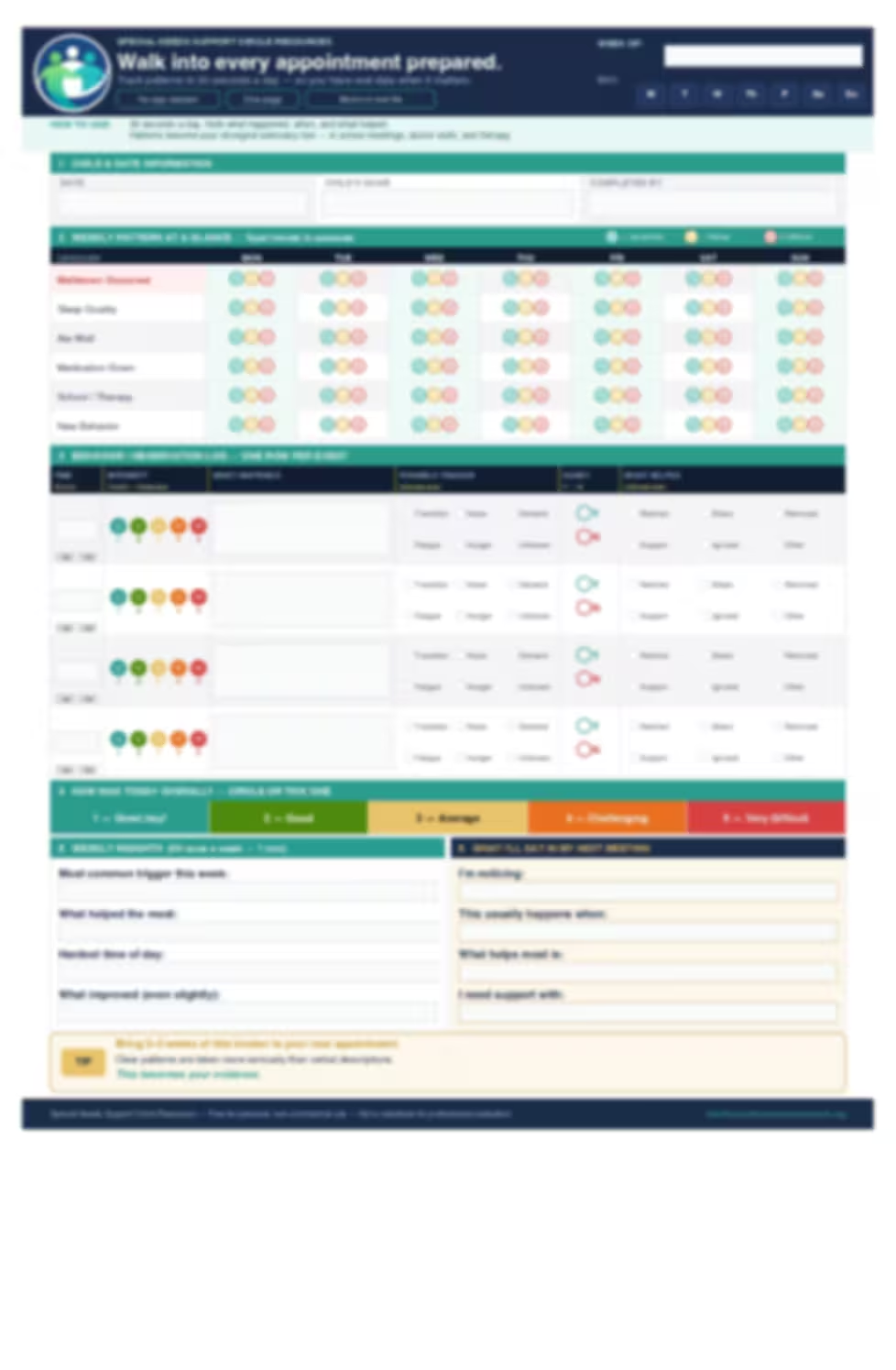
Waiting for an appointment is hard. But it is also useful time. The Behavior Tracker is a free printable tool that helps you document patterns specialists often ask about: sleep, mood, meals, behavior incidents, triggers, and what helped.
Thirty seconds a day for thirty days tells a clearer story than memory ever could.
You do not have to figure this out alone
SNSC was built from the questions real caregiving families ask when the system gives them too many doors and not enough directions. The community includes 64,000+ caregiving families nationwide.
Educational disclaimer: This content is educational only and is not a substitute for professional medical, legal, or educational advice. Diagnostic criteria, school evaluation timelines, benefits eligibility, and program rules vary by state. Always consult a qualified specialist, advocate, or attorney for your specific situation.